
Join us in
Opening the Door to History!
Hudson-Mohawk Vernacular Architecture (HMVA) is a not-for-profit society, chartered by the New York State Department of Education with a mandate to promote recording, interpretation, research, and public education of and about traditional vernacular buildings and cultural landscapes within the Hudson and Mohawk River Valleys. Our interests include early Dutch, English, and Palatine traditions, but extend to the vernacular of all periods.
We take it as our responsibility to see that these rare and significant artifacts from our heritage are conserved for future generations to observe, understand, and appreciate. When these buildings can't be saved, it is incumbent upon us to record their presence through maps, photographs, measured drawings and the compilation of historical records.
To fulfill this mission we work in cooperation with both private and public owners of historic properties. We organize monthly public presentations and study tours throughout the region. We survey and record vernacular structures, offer technical and historical advice, and make information available through our newsletter and website.
What is New World Dutch vernacular architecture?
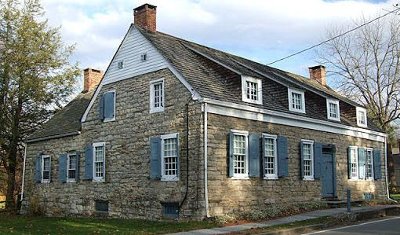
Vernacular architecture is the common way of building and is the expression of regional cultures and traditions. The New World Dutch vernacular building tradition was established soon after the arrival of European settlers from the Netherlands, Germany and other areas into present-day New York, New Jersey and Delaware. The built culture of these people largely reflected centuries old traditions from the Netherlands and adjacent areas, but from the start incorporated innovations, environmental responses and materials that reflected their new environment and the syncretic colonial culture, making it distinct from its European roots.
The flexibility inherent in this approach, together with the ease of construction of the H-bent framing system favored by settlers in the region, resulted in the persistence of this building tradition into the mid-19th century and beyond, well after the cultural dominance of the Dutch had been otherwise supplanted by an influx of new settlers into the region, all of whom brought their own building cultures and traditions. Since the end of the Revolution, the region's vernacular architecture has increasingly reflected the complex social and cultural forces at play, but significant expressions of New World Dutch vernacular architecture remain in many areas.
